
What is Stoicism?
A practical philosophy born in the marketplaces of Athens and tested by an emperor, a statesman and a former slave. Here is what it teaches, where it came from, and how to start living it today.
Stoicism in one paragraph
Stoicism is a philosophy for living well. It holds that our peace depends far less on what happens to us than on how we judge it and what we choose to do next. It divides the world into what is in our power — our judgements, intentions and actions — and what is not: other people, reputation, the economy, our bodies’ fate, the weather. It teaches that good character (virtue) is the only thing truly good, and that everything else is to be used wisely rather than craved or feared. And it is meant to be practised daily, not merely admired.
“Of things some are in our power, and others are not.”
Where it came from
Stoicism began in Athens around 300 BC with Zeno of Citium, a merchant from Cyprus. Ancient accounts say he came to philosophy after losing his cargo in a shipwreck. He taught in public, at the Stoa Poikile — the “Painted Porch” on the edge of the Athenian agora — and his followers took their name from it: the Stoics, the people of the porch.
After Zeno, Cleanthes and then Chrysippus led the school and built it into a complete system of logic, physics and ethics. Centuries later the philosophy travelled to Rome, where it became less a subject for debate and more a way of conducting a life under pressure — in politics, in war, in exile and in slavery.
The three great Roman Stoics
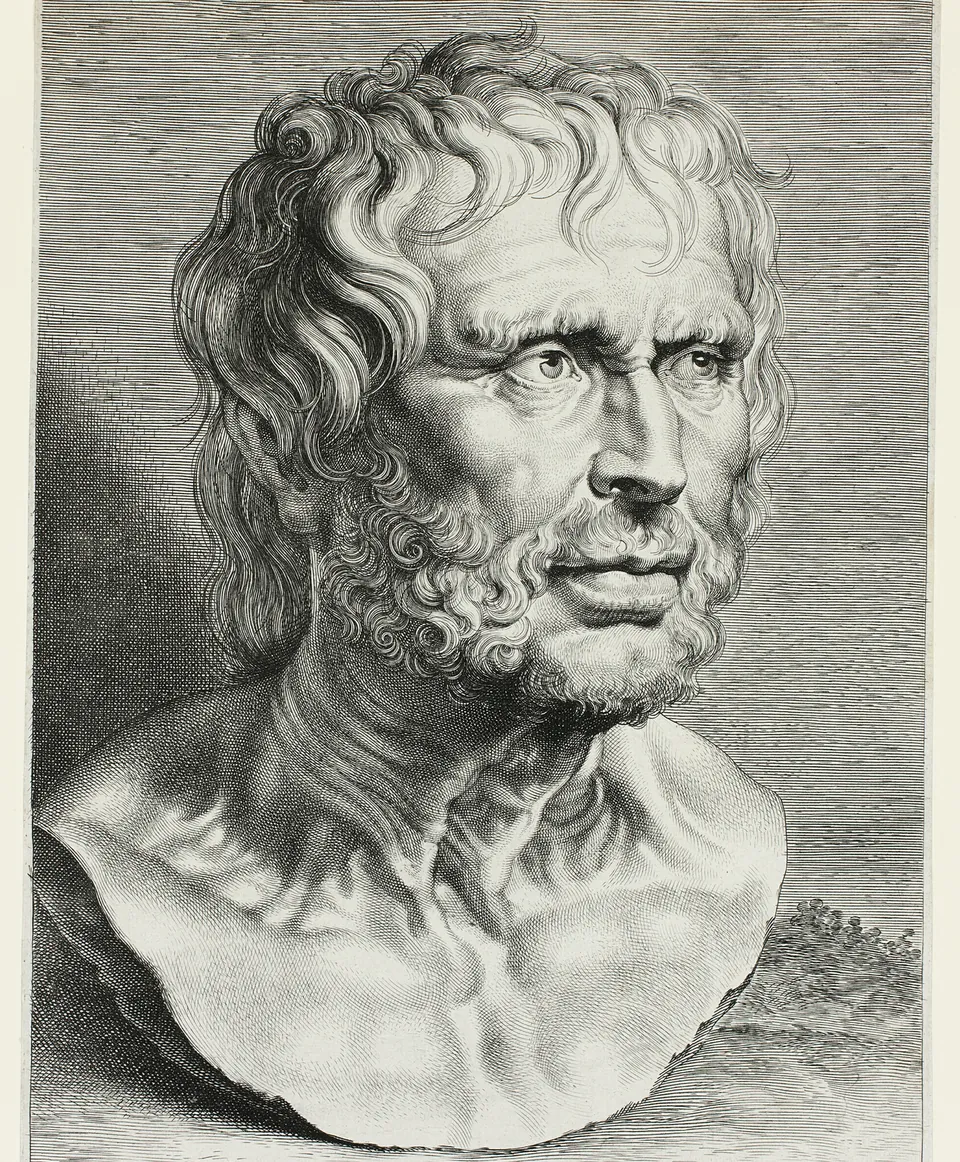

Seneca (c. 4 BC–AD 65) was a statesman, playwright and one of the richest men in Rome, adviser to the young emperor Nero. He spent years in exile on Corsica and was finally ordered by Nero to take his own life. His essays and letters are the most vivid and personal writing the school produced — on anger, grief, time, wealth and fear.
Epictetus (c. AD 50–135) was born a slave in Hierapolis, in what is now Turkey. He studied under the Stoic Musonius Rufus, was later freed, and taught philosophy in Rome until philosophers were expelled from the city, when he founded a school at Nicopolis in Greece. He wrote nothing himself; his student Arrian recorded his lectures as the Discourses and condensed them into the Enchiridion, or Handbook.
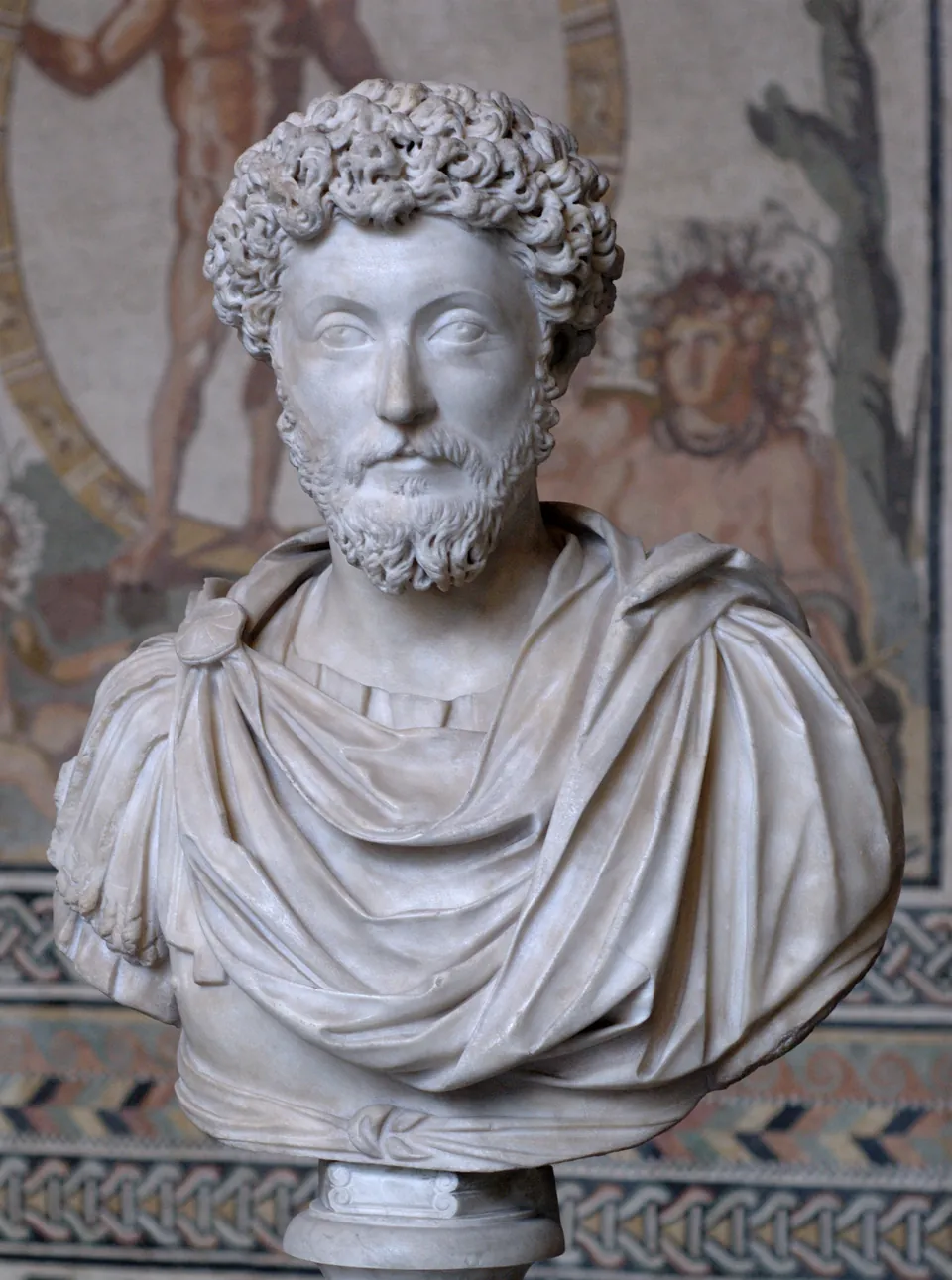
Marcus Aurelius (AD 121–180) was Roman emperor from 161 until his death, much of it spent on campaign on the Danube frontier and through a devastating plague. His Meditations were private notes to himself, written in Greek and never meant for publication. They are one of the most honest records we have of a powerful person trying to stay good.
“No longer talk at all about the kind of man that a good man ought to be, but be such.”
The line of control
Everything in Stoic practice starts here. Some things are “up to us”: what we believe, what we want, what we avoid, and how we act. Everything else — other people, our health, our reputation, the outcome of our efforts — is ultimately not. The Stoics weren’t saying these things don’t matter. They were saying that our peace and our character cannot depend on them.
This is why an insult, a delayed train or a lost contract need not wreck a day. The event itself is outside you. Your judgement of it — “this is unbearable”, “this is a disaster”, “I have been wronged” — is inside you, and can be examined.
“If thou art pained by any external thing, it is not this thing that disturbs thee, but thy own judgment about it. And it is in thy power to wipe out this judgment now.”
Virtue: the only true good
For the Stoics, the only thing that is good in every circumstance is virtue — excellence of character — and the only thing bad in every circumstance is vice. They described virtue through four connected qualities:
- Wisdom — seeing clearly what is good, bad and neither, and judging well.
- Justice — treating others fairly and doing your part for the common good.
- Courage — acting rightly in the face of fear, pain or loss.
- Temperance — self-control and moderation in appetite and desire.
“That which is not good for the swarm, neither is it good for the bee.”
Indifferents
Wealth, health, fame, pleasure — and their opposites — are what the Stoics called indifferents. Not worthless: health is naturally preferable to sickness, and money is useful. But none of them is good in itself, because each can be used well or badly. A Stoic can be rich, as Seneca was, provided the riches serve the person and not the other way round.
“Riches are slaves in the house of a wise man, but masters in that of a fool.”
Seven daily practices
Stoicism was taught as a training. These are the exercises that appear again and again in the ancient sources.
1. Prepare in the morning
Before the day begins, picture what it is likely to bring — including difficult people — and decide in advance how you will respond.
“Begin the morning by saying to thyself, I shall meet with the busybody, the ungrateful, arrogant, deceitful, envious, unsocial.”
2. Review in the evening
At night, go back over the day honestly: what went well, where you fell short, what you will do differently. Seneca described doing exactly this.
“I make use of this privilege, and daily plead my cause before myself…”
3. Rehearse misfortune
Imagine losing what you have — not to become anxious, but so that loss does not ambush you, and so you value what you have now.
“No man loses anything by the frowns of Fortune unless he has been deceived by her smiles…”
4. Remember death
Memento mori: remember that you will die. Not as morbid fascination, but as a filter for what matters today.
“Do not act as if thou wert going to live ten thousand years. Death hangs over thee. While thou livest, while it is in thy power, be good.”
5. Choose discomfort
Practise voluntary hardship — simple food, cold, effort — so that comfort never becomes something you cannot live without.
6. Take the view from above
Zoom out: picture your situation from high above — the city, the country, the planet, the span of history. Problems shrink to their real size.
“Look round at the courses of the stars, as if thou wert going along with them…”
7. Write it down
The Meditations are, in effect, a journal. Writing your own principles and reminders — briefly, daily — is how the ideas move from the page into your behaviour.
What Stoicism is not
- Not emotionless. The aim is not to feel nothing; it is not to be ruled by false judgements.
- Not passive. Accepting what you cannot change goes together with acting energetically on what you can.
- Not selfish. The Stoics saw every person as part of one human community, with duties to others.
- Not a quote collection. Many “Stoic quotes” online were never said by any Stoic. On this site every quote names its source and translation.
How to start
- Read a few pages of Marcus Aurelius or the Enchiridion — start with our sourced quotes and follow the links to the full texts.
- Pick one practice above and do it for a week. The evening review is a good first choice.
- When something goes wrong, ask: what here is in my power?
- Get one short reading each morning with the free daily email.
- Read The Real World Stoic for the modern application.
Questions
Is Stoicism a religion?
No. It is a school of philosophy. The ancient Stoics did talk about God, providence and nature, and modern readers range from religious to secular. The practical core — judgement, character and attention — works either way.
Does being Stoic mean hiding your feelings?
No. Lower-case “stoic” has come to mean grim endurance. The Stoics aimed at something different: not suppressing emotion, but not being ruled by false judgements about what is good or bad. Seneca wrote a whole treatise on anger because he took emotion seriously.
Which Stoic book should I read first?
Most people start with Marcus Aurelius’s Meditations or Epictetus’s short Enchiridion (the “Handbook”). Both are free online in public-domain translations; this site links to them under every quote.
Is Stoicism the same as positive thinking?
No. Stoicism asks you to look directly at loss, difficulty and death — not to think them away. Its confidence comes from knowing what remains in your power when things go wrong.
How long does it take to practise Stoicism?
Minutes a day. A morning preparation, a moment of choice when something goes wrong, and a short evening review are enough to begin.
Keep going
One short Stoic reading every morning, free.